
Begin with the Object, Not the Catalogue
Selecting a specialist glass producer starts with a clear understanding of the finished object. A sculptural pendant, a repeated wall-light component and a large decorative installation may all involve glass, yet they create very different production challenges. Before comparing custom glass manufacturers, define the component’s dimensions, intended setting, visual role and relationship with surrounding hardware. Reference drawings, material samples and photographs can communicate the design direction, while tolerances, attachment points and expected quantities reveal whether that direction is technically realistic.
A useful brief also distinguishes essential features from negotiable ones. The curvature of a shade may be fundamental to the lighting effect, whereas a subtle variation in thickness could be acceptable or even desirable in an artisan-made piece. Colour deserves similar precision: terms such as amber, smoke or opal describe broad families rather than exact outcomes. Establishing priorities early gives the manufacturer room to suggest appropriate techniques without weakening the original concept. It also makes later evaluations more objective, because prototypes can be measured against agreed design and functional criteria.
Examine Craft, Engineering and Communication Together
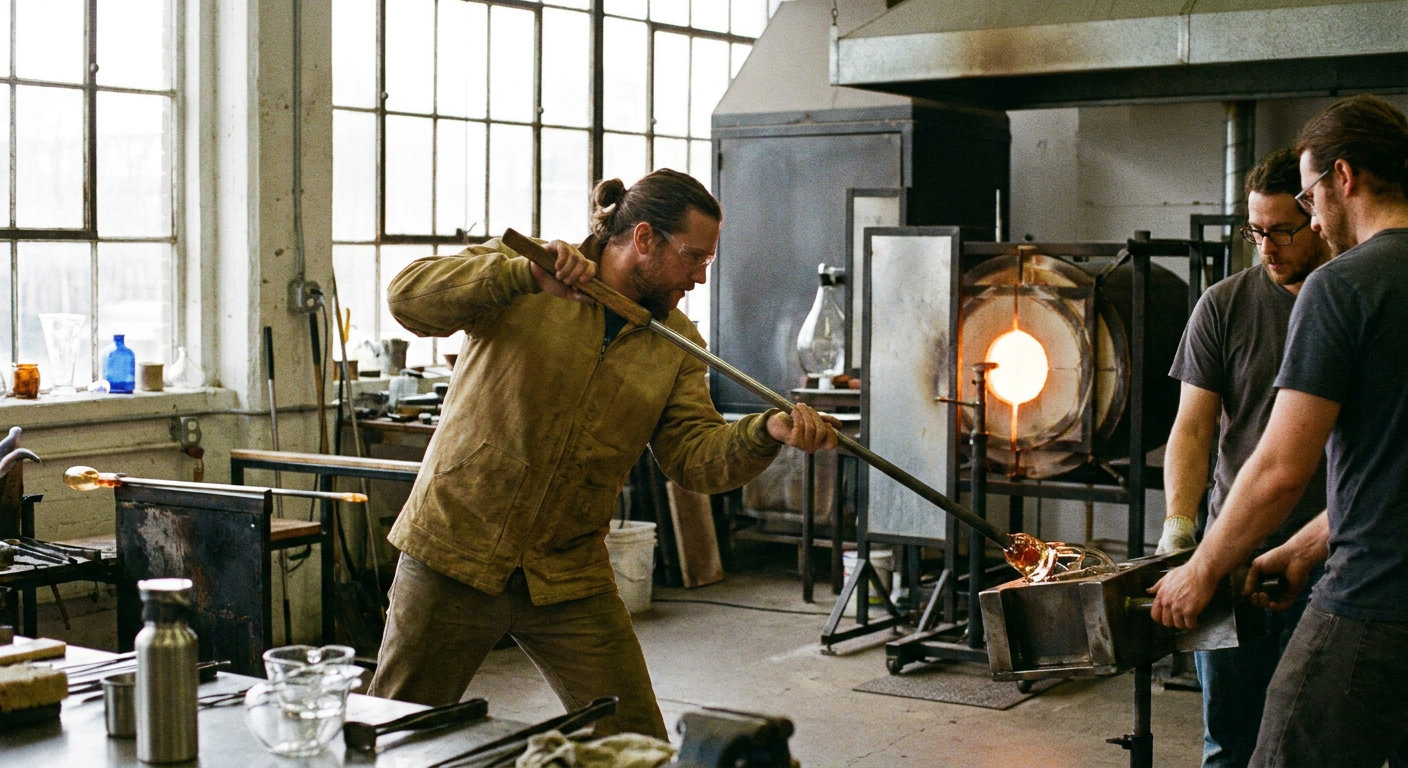
Production capability is more than an attractive portfolio. Strong partners can explain how forming methods, cooling cycles, colour application and finishing influence the final component. They also consider how glass will interact with frames, cables, fasteners and light sources. When reviewing custom glass manufacturers, it is therefore valuable to look for evidence of collaboration with designers and technical departments, particularly on components that must integrate into a larger product. A factory combining artisan knowledge with modern development processes may be especially well placed to preserve expressive details while addressing repeatability.
Communication often reveals as much as finished samples. Productive early conversations cover feasibility, mould requirements, prototype stages, acceptable tolerances and potential variations between pieces. Rather than agreeing to every request immediately, an experienced manufacturer may identify fragile transitions, difficult dimensions or finishes that behave unpredictably. This is not resistance to creativity; it is evidence that the proposal is being examined seriously. Clear documentation is equally important, especially when several stakeholders must approve the design or when components will be delivered to an assembly partner in another country.
Use Prototypes to Make the Final Decision
A prototype turns assumptions into visible evidence. It allows the project team to assess scale, weight, colour, reflections and the quality of connections under realistic conditions. For lighting applications, the piece can also be observed both illuminated and unlit, since surface treatments and internal textures may change character dramatically. Reliable custom glass manufacturers treat this stage as part of development rather than a miniature production run. Feedback can then be translated into revised drawings, adjusted tooling or a second sample before larger quantities are commissioned.
The final choice should balance aesthetic sensitivity, technical discipline and dependable project management. Price remains relevant, but quotations are easier to compare when they identify tooling, sampling, finishing, packaging and production assumptions separately. Delivery planning and protective packaging also matter because an excellent component has little value if it arrives damaged or too late for assembly. Ultimately, the right partner understands both the emotional impact of handcrafted glass and the practical demands of a complete product, creating a working relationship in which design intent can survive every stage from sketch to installation.